

Key Takeaways
- You don’t need to completely eliminate dairy and gluten to heal PMOS.
- The actual issue for most women is the insulin spike caused by certain foods, not the dairy or gluten proteins themselves.
- Instead of blind restriction, use an 8-week elimination window to determine if you are personally reactive to these foods.
- By focusing on glycemic control—managing insulin and androgen output—you can achieve significant hormonal balance, even without strict dietary bans.
No — you do not have to eliminate dairy and gluten completely to manage PMOS.
For most women, the real problem isn’t the dairy protein or the gluten molecule itself. It is the insulin spike that comes with the foods containing them. Once you understand that distinction, you can stop restricting blindly and start eating with precision.
But my nutritionist said to cut everything out…
The blanket “cut dairy and gluten” advice is not wrong, exactly — it is just incomplete.
Both food groups can worsen PMOS symptoms in some women, but the mechanism matters enormously:
- Dairy proteins (whey and casein): They are rich in branched-chain amino acids (leucine, isoleucine, and valine). These amino acids stimulate insulin and IGF-1 secretion far above what you would expect from the sugar content alone. Elevated IGF-1 signals your ovaries to produce more androgens, the hormones driving acne, excess hair, and irregular cycles.
- Gluten-containing grains (wheat, barley, rye): These carry a high glycemic load. Since approximately 75% of lean women and up to 95% of overweight women with PMOS already have some degree of insulin resistance, that glycemic load lands like a match in a room full of kindling. The problem is usually the starch, not the gluten protein itself.
If you replace your wheat bread with gluten-free white rice bread, same glycemic load, your insulin response barely changes. The label changes; the biology does not.
Is Dairy or Gluten Triggering Your Symptoms?
A review described the syndrome as having ‘phenotypic heterogeneity’ — meaning two women can both have a PMOS diagnosis and need completely different diets.
The most reliable way to find your answer is a structured 8-week elimination window (the exact timeframe used in clinical studies that yielded a 51% reduction in insulin resistance scores and an average 8.6 kg weight loss).
Step 1: Map Your Symptoms
Before you start, sort your symptoms into two columns:
| Column A — Metabolic Roots (Present regardless of what you ate yesterday) | Column B — Possible Food Reactions (Appear or worsen within 24–48 hrs of eating) |
| Irregular or absent periods | Bloating or gas shortly after a meal |
| Persistent weight gain despite effort | Acute skin flare — inflammatory acne, redness |
| Excess hair growth or scalp thinning | “Brain fog” or extreme tiredness after eating |
| Dark skin patches (acanthosis nigricans) | Sudden changes in bowel habits |
- If Column B is long: An elimination window is worth your time.
- If Column A dominates and Column B is empty: Your biggest lever is glycemic control, not elimination.
Learn more: Is Spearmint Tea Effective for PMOS Facial Hair Growth?
Elimination & Inclusion Guidelines (8 Weeks)
What to Remove
- Liquid dairy: cow’s milk, cream, whey protein supplements, low-fat yogurt
- High-starch gluten sources: bread, pasta, pastries, cereals made from wheat, barley, or rye
- Hidden insulin drivers: agave, honey, concentrated fruit juice, and ‘health-halo’ sweeteners
What You Do NOT Have to Remove
- Hard, aged cheeses (parmesan, cheddar, gouda) — these are significantly less insulinogenic than liquid milk
- Full-fat plain Greek yogurt — the fermentation process reduces the whey content and may actually improve insulin sensitivity
- Oats labeled gluten-free — if you tolerate them and pair them with protein and fat to blunt the glycemic response
The study protocol tht produced the 51% HOMA-IR reduction allowed 1 oz of full fat cheese per day throughout the intervention. Restriction does not have to mean perfection.
What if I cannot do a full elimination right now?
The Mediterranean Strategy
a Mediterranean pattern emphasizes low-starch vegetables, olive oil, legumes, and omega-3-rich fish. Research showed it reduced PMOS severity markers even without strict elimination. The mechanism is the same: lower glycemic load, lower insulin, lower androgen output.
The DASH Pattern
A trial using the DASH (Dietary Approaches to Stop Hypertension) diet showed reductions in insulin levels and androstenedione — a key androgen — alongside improved antioxidant markers. No dairy or gluten ban required. The strategy was pattern-based, not food-group-based.
If you cannot eliminate, reduce the volume and frequency of the highest-glycemic offenders. Clinical data consistently shows that partial reduction still produces results.
After 8 weeks — what do I do with the data?
Reintroduce one food group at a time, with at least 72 hours between each reintroduction. Track these markers:
- Energy: Did the post-meal slump return?
- Skin: Did acne flare within 48 hours?
- Digestion: Bloating, cramping, changes in bowel habits?
- Cycle: Any shift in length or symptom intensity? (Basal body temperature tracking helps here.)
- Hair: Use the Ferriman-Gallwey scale — the clinical gold standard for quantifying hirsutism — to score hair growth in 9 body areas before and after.
Your result logic is simple:
- Reactive to dairy or gluten: Reduce or remove it. You now have personal biological data, not just a trend to follow.
- Non-reactive: Reintroduce it and shift your full clinical focus to glycemic load management. You were never the patient who needed elimination.
As your insulin sensitivity improves — measured by your HOMA-IR score — your tolerance for previously reactive foods may actually increase. Metabolic health is not static. Your diet should evolve with it.
References
- Sochol KM, et al. (2019). The Effects of Dairy Intake on Insulin Resistance: A Systematic Review and Meta-Analysis of Randomized Clinical Trials. https://doi.org/10.3390/nu11092237
- Cowan S, et al. (2023). Evidence-Based Lifestyle Guidelines and Self-Management Strategies Utilized by Women with Polycystic Ovary Syndrome. https://doi.org/10.3390/nu15030589
You own the how
Turn this into meals: the NourishFix planner builds a week of PMOS-friendly meals and a shopping list.
Read next
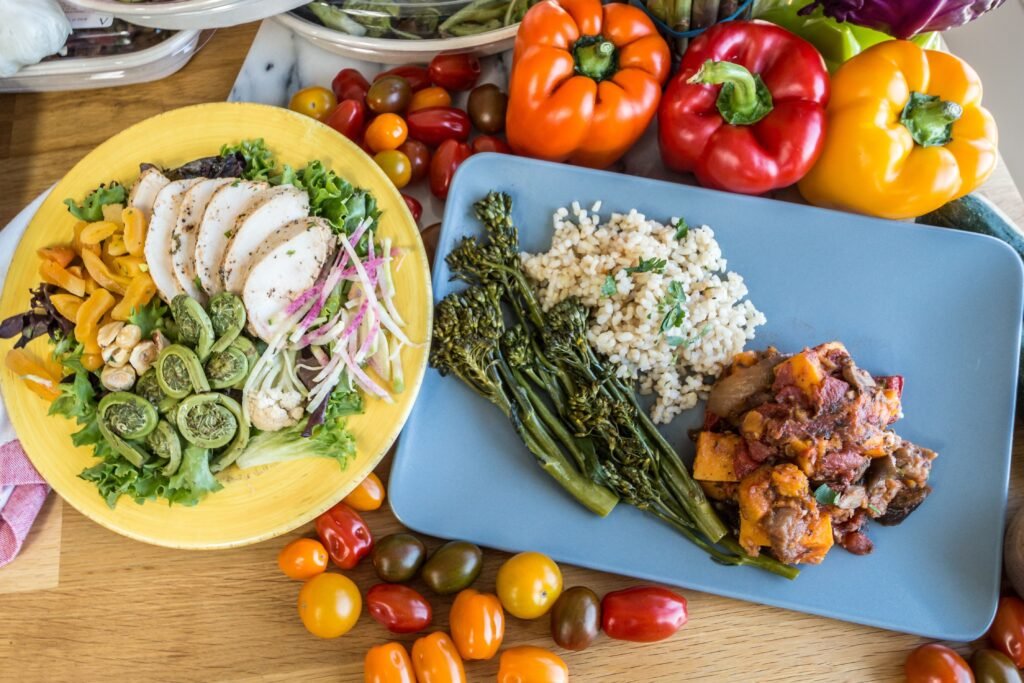 What is the best diet for PMOS?By Shiundu Valerie, RDNDiscover the best diet for PMOS based on clinical evidence, including DASH, Mediterranean, Low-GI, and strategies tailored to your phenotype.
 What are the best foods for PMOS (formerly PCOS)?Discover the best foods for PMOS to lower insulin resistance, reduce excess androgens, and restore your hormonal balance naturally.
 Why is your belly still growing after cutting sugar and dairy?Cut sugar and dairy, but struggling with abdominal obesity? Discover how "android obesity" and hormonal switches trap fat in your midsection.
 What is the best breakfast for PMOS to prevent afternoon sugar cravings?What is the best breakfast for PMOS to prevent afternoon sugar cravings? Try these high-protein PMOS breakfast options to lower insulin.
 Why is it so hard to lose weight with PMOS, even when eating healthy?Eating clean, but the scale won't move? Discover the 4 hidden hormonal barriers making it hard to lose weight with PCOS and…
Sources
2 studies and guidelines behind this guide
Every NourishFix guide is written by a registered dietitian and draws on peer-reviewed research and clinical guidelines. How we choose and check sources