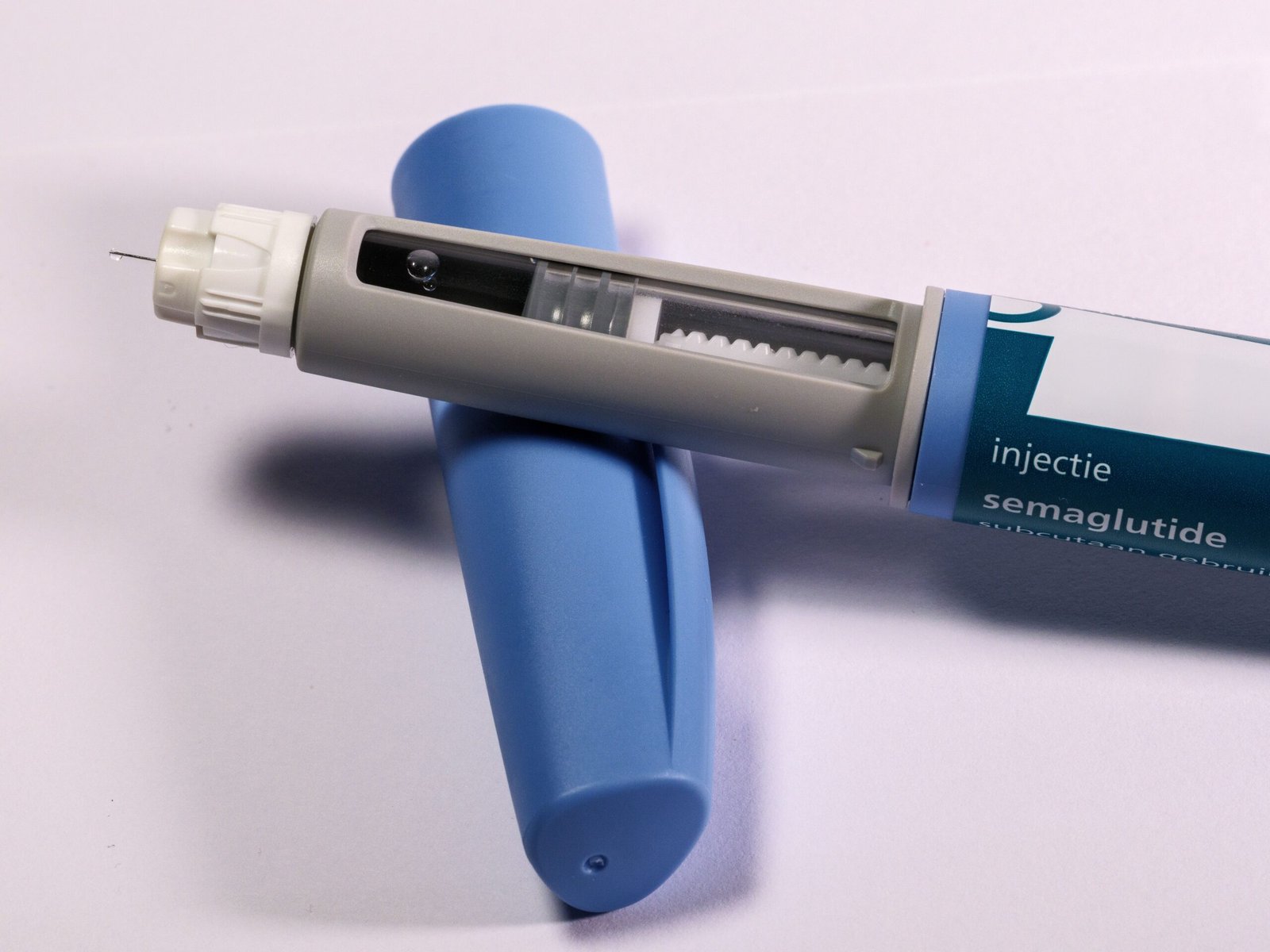

To hit your protein goals while navigating food aversion, prioritize small, frequent portions of “liquid-adjacent” or low-fat proteins like white fish, egg whites, or fresh ricotta. By putting protein first and choosing gentle sources that glide through your system easily, you can protect your muscle mass without overwhelming a stomach that is currently processing food at a slower pace.
Why does food suddenly feel repulsive?
Medications like Ozempic, Wegovy, and Mounjaro (GLP-1 receptor agonists) essentially turn your digestive system into a “slow drain.” This is called delayed gastric emptying. Because food stays in the stomach longer before moving into the small intestine, your body’s internal sensors are constantly sending “I’m full” signals to your brain.
These medications also act directly on the area postrema, the brain’s chemoreceptor trigger zone for nausea.1 According to research, when you eat foods that are heavy, fatty, or highly “viscous” (thick), they sit in that slow-moving drain and trip the area postrema, causing your brain to interpret a normal meal as a threat.2 This is why your favorite foods can suddenly feel repulsive.
How much protein do I actually need?
Reserch recommends 1.2–1.5 g of protein per kilogram of actual body weight per day during GLP-1 therapy.3 This target — above standard population recommendations — is set to mitigate muscle loss during the accelerated weight reduction these medications produce.
| Daily target | Visual guide | |
| Per kg body weight | 1.2–1.5 g/kg actual body weight | 3–4 palm-sized portions spread across the day |
| 68kg (150 lbs) person | ~80–100 g/day | ~25 g per meal across 3–4 meals |
| 90kg (200 lbs) person | ~110–135 g/day | ~30–35 g per meal across 3–4 meals |
| As % of calories | 25–30% of total daily energy |
Distribute protein across 3–4 small meals rather than concentrating it in one or two. A stomach with delayed emptying cannot process a large protein bolus efficiently, and attempting to do so worsens nausea.
What proteins can I actually tolerate?
Fat content is the primary determinant of gastric transit speed. High-fat proteins slow emptying further and increase nausea risk.2 Easiest to hardest on a GLP-1-slowed system:
- Most tolerated: white fish (cod, sea bass, tilapia), poached or soft-boiled eggs, egg whites, plain Greek yogurt, low-fat cottage cheese
- Generally tolerated: skinless poultry, fresh ricotta at room temperature, split red lentils at lunch
- Higher risk: fatty fish in large portions, mature hard cheeses, red meat, fried preparations, high-fat protein bars
Temperature note: cold foods increase gastric viscosity.2 Fresh cheeses and yogurt are better tolerated at room temperature than straight from the refrigerator.
Legumes note: beans and lentils are effective protein sources but carry a significant fibre load. To avoid late-night bloating, eat your legumes at lunch rather than dinner. Peeled varieties such as split red lentils are lower in fibre and considerably gentler.
Cooking Methods for Tolerability
How you prepare your protein is just as important as the source. To facilitate “gastric accommodation” and reduce nausea:
- YES: Use simple methods like steaming, baking, or boiling.
- NO: Avoid frying or sautéing, as added oils increase fat content and can slow digestion further.
- Bland is Better: Avoid heavy seasonings, spicy marinades, or rich, home-cooked sauces that can trigger aversions.
What to Avoid (The “Repulsion Triggers”)
To prevent “tripping” the brainstem’s aversion center (the area postrema), avoid proteins that are highly viscous or high in saturated fat:
- Red Meats: Beef, lamb, and non-lean pork.
- Processed Meats: Cold cuts, sausages, and canned meats.
- Mature Cheeses: Hard, aged cheeses are significantly higher in fat and more likely to cause issues.
- High-Viscosity Foods: Thick foods like peanut butter can sit in the stomach like a “slow-moving drain,” increasing fullness signals to the point of nausea.
Why is dinner the hardest time of day?
Gastric emptying slows progressively across the day as food accumulates. By early evening, the stomach is working against a backlog of partially emptied content from earlier meals. To manage this, we use the Adapted Harvard Healthy Plate strategy:
- Avoid nutrient-dense soups and broths at dinner. Mixing liquids and solids increases stomach volume and delays emptying further. Reserve liquids for between meals.
- Choose low-fibre cooked vegetables. Peeled, skinless preparations — cooked zucchini, pumpkin, beets — transit faster than raw high-fibre vegetables. A raw salad at dinner is one of the highest-risk choices during active GLP-1 nausea.
- Add fat raw, not cooked. A drizzle of extra virgin olive oil added after cooking is easier to process than fats heated through frying or sautéing. Eliminating fat entirely is not the goal — it is required for gallbladder function.
Eating behaviours that reduce nausea
- No carbonated drinks. Gas increases intragastric pressure on a system already operating under volume stress.
- Separate fluids from meals. Drink between meals in small sips. Adding liquid volume to a slow-emptying stomach accelerates fullness and nausea onset.
- Eat fruit as a standalone snack. Fruit mid-meal adds volume and fermentable fibre. Mid-morning or mid-afternoon works better.
- Stay upright after eating. Lying flat immediately post-meal removes gravitational assistance from gastric transit.
- Avoid tight waistbands during and after meals. Abdominal compression worsens the sensation of fullness.
- The “First Bite” Rule: Stop eating at the very first sensation of being full to avoid the stomach stretching that triggers repulsion.
- Small and Frequent: instead of three large meals, aim for 4 to 6 small, protein-rich snacks throughout the day
When to contact your prescriber
Mild nausea during GLP-1 dose escalation is expected and typically resolves within 2–4 weeks. Vomiting is a different signal, it indicates the current dose exceeds what the gastrointestinal system can tolerate and warrants a clinical conversation.
Contact your prescriber if you experience:
- Inability to maintain adequate fluid or caloric intake — functional Grade 3 nausea
- Repeated vomiting — sign of dose intolerance and a dehydration risk
- Consistent weight loss exceeding 1.5 kg (3.3 lbs) per week — pace exceeds muscle-preserving parameters
Dose adjustment, not dietary willpower, is the correct clinical response to persistent vomiting.
GLP-1 nausea and food aversion are transient for most people. The clinical priority during this window is maintaining consistent protein intake to protect the muscle mass that determines long-term metabolic health after weight loss.
References
- Alhazmi A, le Roux CW. Do no harm: managing nausea and vomiting in GLP-1 based obesity therapies. Front Endocrinol (Lausanne). 2026 Mar 3;17:1788698. doi: 10.3389/fendo.2026.1788698. PMID: 41852477; PMCID: PMC12992036.
- Gentinetta S, Sottotetti F, Manuelli M, Cena H. Dietary Recommendations for the Management of Gastrointestinal Symptoms in Patients Treated with GLP-1 Receptor Agonist. Diabetes Metab Syndr Obes. 2024 Dec 19;17:4817-4824. doi: 10.2147/DMSO.S494919. PMID: 39722834; PMCID: PMC11668918.
- Sievenpiper JL, Ard J, Blüher M, Chen W, Dixon JB, Fitch A, Gigliotti L, Khunti K, Lecube A, Lean MEJ, Mittendorfer B, Pfeiffer AFH, Ryan DH, Vilsbøll T, Van Gaal LF. Nutritional and lifestyle supportive care recommendations for management of obesity with GLP-1 – based therapies: An expert consensus statement using a modified Delphi approach. Obes Pillars. 2025 Nov 11;17:100228. doi: 10.1016/j.obpill.2025.100228. PMID: 41502845; PMCID: PMC12768930.