

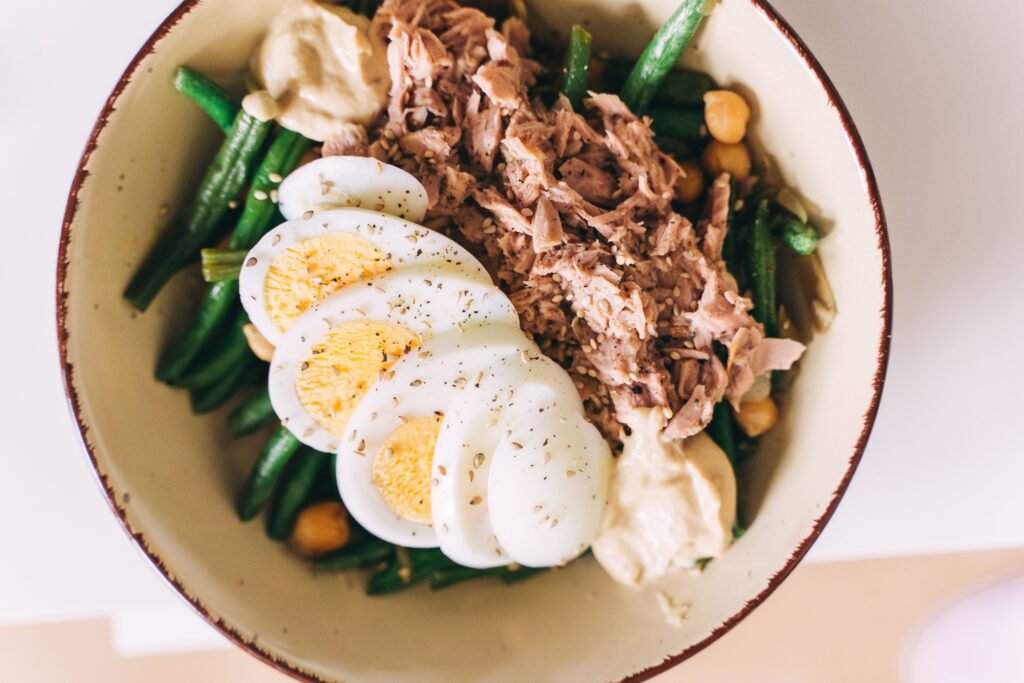
The most effective strategy for an evening meal is the “Protein-Fiber Sandwich.” This isn’t a literal sandwich; it is a nutritional blueprint designed to anchor your final meal with 25–40g of lean protein and at least two cups of high-volume, non-starchy vegetables. This combination stabilizes blood sugar levels throughout the night, preventing the hormonal hunger spikes that often sabotage your progress the following morning.
Is eating after 7 pm actually making you gain weight?
The fear of late-night eating is often rooted in a misunderstanding of how our internal clocks work. What matters is meal timing relative to your biological night — the period following Dim-Light Melatonin Onset (DLMO), the point your body initiates melatonin production.
Clinical research demonstrated that consuming calories too close to your biological night is associated with increased body fat, independent of your total daily caloric intake or physical activity levels.
Furthermore, heavy or nutrient-poor meals eaten late can disrupt your sleep architecture. Studies show that when sleep quality suffers, your body increases production of ghrelin, the hormone responsible for hunger, leading to an average increase of 328 calories in subsequent snacking the next day.
Why protein is the critical evening variable
To support weight loss in the evening, you must leverage the Thermic Effect of Food (TEF). TEF refers to the energy your body spends to digest, absorb, and process the nutrients you consume.
Protein boasts the highest TEF of all macronutrients, meaning your body burns more energy breaking down a chicken breast or tofu than it does a refined carbohydrate.
According to evidence-based protocols, consuming 20–40g of high-quality protein before sleep is effectively digested and utilized overnight to fuel muscle protein synthesis (MPS) and metabolic repair.
For those focused on body composition, this protein “anchor” serves as a protective mechanism for your lean muscle mass during a calorie deficit.
Learn more: How to Structure Meals for Weight Loss on the Night Shift
Evening meal plate structure
| Component | Target amount | Best sources |
| Lean protein | 25–40 g (older adults and athletes: aim for 40 g) | White fish, tofu, Greek yogurt, low-fat cottage cheese, egg whites |
| Non-starchy vegetables | ≥ 2 cups (half the plate) | Broccoli, spinach, asparagus, courgette, leafy greens — steamed or roasted |
| Slow-digesting carbohydrate | ½ cup — optional, not required | Quinoa or sweet potato; provides glucose for serotonin synthesis and eases sleep onset |
| Pre-sleep snack (if genuinely hungry) | Small, casein-dominant | ½ cup low-fat cottage cheese or 150 g plain Greek yogurt — slow digestion offsets overnight catabolism |
Dinner Examples
The ideal plate consists of 25–40g of lean protein, two cups of non-starchy vegetables, and a small (1/2 cup) portion of slow-digesting carbohydrates.
- Grilled White Fish & Quinoa Bowl
- Protein: A palm-sized portion of white fish (such as cod or tilapia).
- Volume: Two cups of steamed broccoli and kale.
- Slow Carb: 1/2 cup of cooked quinoa.
- Roasted Chicken & Spinach Plate
- Protein: Lean chicken breast (roughly the size of a deck of cards).
- Volume: A large serving of sautéed spinach with garlic.
- Slow Carb: 1/2 of a medium roasted sweet potato.
- Tofu & Green Veggie Stir-Fry
- Protein: Firm tofu cubes.
- Volume: A mix of peppers, zucchini, and bok choy.
- Slow Carb: A small side of quinoa or brown rice.
Bridging the Gap Between Cravings and Goals
When late-night cravings hit, the most effective tool in your kit is volume. High-volume, low-calorie vegetables—such as spinach, broccoli, or asparagus—act as a “gastric buffer.” This fiber-rich volume provides the physical sensation of fullness while slowing the rate of glucose absorption, preventing the insulin spikes that can signal your body to prioritize fat storage.
Research highlights that the timing of your last meal is strongly correlated with glycemic control; eating too close to bedtime is often linked to higher fasting glucose levels. By prioritizing greens, you fulfill your need for volume without the metabolic penalty of calorie-dense, processed foods.
What to avoid in the evening
- Highly processed, high-fat, or fried foods — delay gastric emptying, increase reflux risk when lying flat, and disrupt REM sleep architecture
- High-sugar desserts or refined carbohydrates — produce insulin spikes that stimulate overnight fat storage and disrupt the cortisol and ghrelin balance the following morning
- Large meal volume within 1 hour of sleep — increases core body temperature, which competes with the natural drop required for sleep onset
What If Hunger Strikes Late?
If you feel genuine hunger—not just a craving—within an hour of bed, do not reach for high-sugar snacks. Utilize a Micro-Snack Protocol:
- Cottage Cheese: A small bowl (naturally high in casein).
- Casein Protein Shake: A shake made with 30–40g of casein protein powder.
- Plain Greek Yogurt: A serving of Greek yogurt, which provides a similar slow-release protein effect.
Practical directive
- Stop eating at least 2 hours before your intended sleep time — not 7 pm, but 2 hours before you actually go to bed.
- Build the plate around 25–40 g lean protein + ≥ 2 cups non-starchy vegetables. Add a small slow-carbohydrate portion if sleep onset is difficult.
- If genuine hunger (not craving) occurs within an hour of bed, a casein-dominant snack — cottage cheese or plain Greek yogurt — is preferable to going to sleep hungry, which also disrupts sleep quality.
- Protect sleep duration. A poor night’s sleep produces a 328 kcal hunger surplus the following day — undoing dietary restraint at the table.
References
- Broussard et al. (2016): Elevated ghrelin predicts food intake during experimental sleep restriction. https://doi.org/10.1002/oby.21321
- McHill et al. (2017): Later circadian timing of food intake is associated with increased body fat. American Journal of Clinical Nutrition. https://doi.org/10.3945/ajcn.117.161588
- Simon et al. (2022): The impact of a self-selected time restricted eating intervention on eating patterns, sleep, and late-night eating in individuals with obesity. https://doi.org/10.3389/fnut.2022.1007824
- Snijders et al. (2019): The Impact of Pre-sleep Protein Ingestion on the Skeletal Muscle Adaptive Response to Exercise in Humans: An Update. https://doi.org/10.3389/fnut.2019.00017
You own the how
Turn this into meals: the NourishFix planner builds a week of balanced, filling meals and a shopping list.
Read next
 How to lose belly fat with a high protein dietBy Shiundu Valerie, RDNCan a high protein diet reduce belly fat? Discover how, optimal protein targets, and clinical evidence for targeting visceral
 How to deal with extreme hunger when starting a weight loss planStruggling with extreme hunger while dieting? Discover the why behind weight loss plateaus, how to manage cravings, and satiety strategies.
 How to eat enough protein with Ozempic food aversionStruggling to eat on Ozempic? Discover how To Eat Enough Protein with Ozempic Food Aversion and strategies to protect your muscle mass.
 Why am I gaining weight on Wegovy?Tracking macros but still gaining weight on Wegovy? Discover the reason behind weight loss plateaus and how to fix a stalled metabolism.
 Is a high-protein or low-carb diet better for losing belly fat?Struggling to lose belly fat? Discover the difference between high-protein vs. low-carb diets and which is better.
Sources
4 studies and guidelines behind this guide
Every NourishFix guide is written by a registered dietitian and draws on peer-reviewed research and clinical guidelines. How we choose and check sources